
The Medicine Wheel Garden
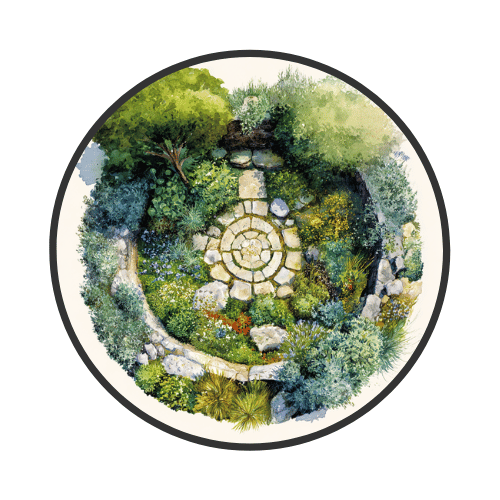
A medicine wheel garden is a circular garden design rooted in traditional European herbal practices. Long used in England and other parts of Europe, these gardens were designed both for beauty and function, offering an organized way to grow medicinal herbs for everyday wellness support. While the term may sound familiar, it is important to note that European medicine wheel gardens are distinct from Native American Medicine Wheels and carry a different cultural history and purpose.
At its core, a medicine wheel garden is divided into four primary sections aligned with the cardinal directions. Pathways typically separate each quadrant, creating a wheel like shape. Many designs also include a central stone, tree, or feature that acts as a visual and symbolic anchor.
Purpose and Design
Medicine wheel gardens were traditionally planted with healing in mind. Herbs were selected for their supportive properties and harvested to make teas, tinctures, poultices, and other preparations. The circular layout allowed for easy access, efficient harvesting, and a sense of balance within the space.
Each cardinal direction is often associated with a classical element and energetic qualities:
- North | Earth Grounding, nourishment, stability
- East | Air Breath, clarity, new beginnings
- South | Fire Energy, movement, transformation
- West | Water Restoration, calm, emotional balance
These associations can guide herb placement, though modern gardens may adapt freely based on climate, soil conditions, and personal intention.
Planning Your Own Medicine Wheel Garden
When creating a medicine wheel garden, simplicity and intention go a long way.
- Select herbs you already use or would like to incorporate into daily life
- Research traditional herbal uses and growing requirements
- Consider your planting zone and sunlight needs
- Arrange herbs by direction, element, or growth habit
- Use natural materials like stone, wood, or mulch for pathways
- Include a central feature to create visual focus and harmony
- Design the space to feel calm, inviting, and restorative
A medicine wheel garden should feel both practical and peaceful, offering a place to reconnect with the rhythms of nature.
Common Herbs for a Medicine Wheel Garden
Many classic medicinal herbs thrive in this style of garden. A few commonly used options include:
- Chamomile
- Echinacea
- Feverfew
- Garlic
- Ginger
- Ginkgo
- Ginseng
- Goldenseal
- Licorice
- Peppermint
- Raspberry Leaf
- St. John’s Wort
- Turmeric
Choose herbs that align with your climate and experience level, and always research safe use before preparing remedies.
Expanding Beyond Herbalism
Medicine wheel gardens can evolve beyond medicinal herbs alone. With thoughtful additions, the space can also support meditation, astrology, seasonal rituals, or spiritual practices. This may include symbolic plant choices, intentional layout, or ritual elements woven into the design.
A medicine wheel garden is ultimately a living reflection of balance, intention, and relationship with the natural world. Whether practical, spiritual, or both, it invites you to slow down, observe, and grow with the seasons.
How would you design your own medicine wheel garden?