

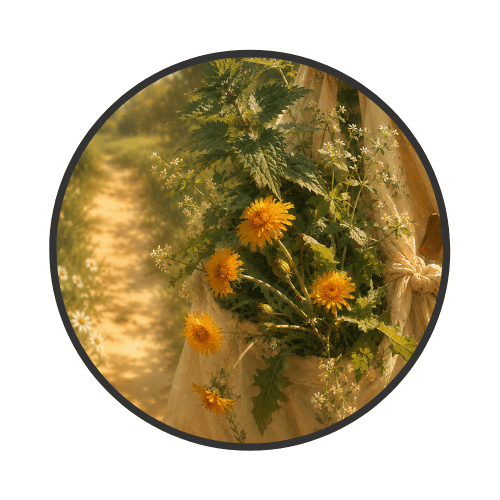
Spring is that magical moment when the earth shakes off its frost, and comes into bloom. Buds pop and birds gossip in the hedgerows. If winter is about hibernating and hoarding tea bags, spring is for waking up and exploring outside!
Foraging and nurturing healthy soil is the mission for this season. Together, they’re a springtime recipe for connection, nourishment, and maybe even a few wild salads!
Humans have foraged since… well, forever. Long before supermarkets, we were out in the hedges and meadows, learning which leaves to nibble and which to avoid like the plague (literally!). And while we’re not suggesting you trade your pantry for a patch of nettles, dipping a toe into the world of wild herbs is fascinating and fun.
Here are a few springtime stars you can safely get to know (and possibly munch on), as nature rolls out her green carpet-
Dandelion (Taraxacum officinale)
Spot it- Those unmistakable golden suns-on-stems pop up in lawns and fields everywhere. Look for jagged, lion-tooth-shaped leaves in a basal rosette (flat to the ground), and hollow stems that ooze milky sap.
Use it - Every bit of the dandelion is edible- roots, leaves, and flowers. Young leaves are less bitter and perfect in spring salads; roots can be roasted as a coffee alternative, and flowers make a cheerful tea or jelly (check out the Dandelion Jam recipe in Almanac 2025 edition)
Why we love it at RidgeCrest -Dandelion supports liver health and digestion, making it a spring detox darling. It’s no coincidence it shows up in nature just when our systems need a gentle nudge.
Nettle (Urtica dioica)
Spot it - Look, but don’t touch (yet)! Nettles have jagged, dark green leaves with fine hairs that sting on contact. They grow in clusters near rivers, hedges, and disturbed soils. Use gloves and scissors to snip the top 2–4 leaves.
Use it -Steamed, sautéed, or brewed as tea, nettles lose their sting when cooked and are incredibly nutritious…..think iron, magnesium, and calcium. Like spinach, but sassier!
Why we love it at RidgeCrest - Nettles are a mineral-rich powerhouse and have been used traditionally for everything from joint support to glowing skin.
Cleavers (Galium aparine)
Spot it - Also known as “sticky weed,” cleavers cling to your clothes and climb over hedges with whorled leaves and tiny hook hairs. They feel like Velcro and grow in dense tangles.
Use it - Best steeped fresh in cold water overnight for a gentle lymphatic tonic. Drink it to support spring cleansing.
Why we love it at RidgeCrest - Cleavers are supportive to your lymphatic system, helping the body to naturally sweep out the cobwebs after a long winter.
Foraging Tips
-
Always harvest from clean, unsprayed areas.
-
If in doubt, don’t eat it. (A good foraging book or app can help.)
- Only take what you’ll use, and leave plenty behind for pollinators and other wild creatures. Foraging is a relationship, not a raid!
Healthy soil is the secret to thriving flora and fauna. Beneath the surface, there’s a whole world of microbes, fungi, and worms working together to support plant life, and after a long winter, the soil needs a little help waking up too.
Start with compost, nature’s version of a green smoothie. It’s rich in nutrients and feeds the microbes that make the soil fertile. Then add mulch, your soil’s cozy blanket. It locks in moisture, keeps weeds down, and slowly breaks down to feed your garden.
And when it comes to digging, less is more. Over-tilling can disrupt the delicate underground life that keeps soil healthy. Let roots do the work, they naturally aerate the earth as they grow and break down.
Finally, welcome life in! When your garden teems with bugs, birds, and beneficial fungi, you're on the right track! Skip the synthetic fertilizers and let nature do its thing.