
As homeowners, Will & I view ourselves as stewards of the land we live on and choose to use it to promote wildlife and nature. Our land surrounds our house, only 0.17 of an acre, and we are close to the Great Salt Lake. Our area is experiencing much growth, and new property is being constructed around us; countless new single- and multi-family homes are popping up daily. They even had to build a new highway to accommodate the increased traffic. This new highway is enjoyable to drive on. To the east of the road are new homes, and to the west are wetlands on the bank of the Great Salt Lake with all the wildlife crucial for the local ecosystem.
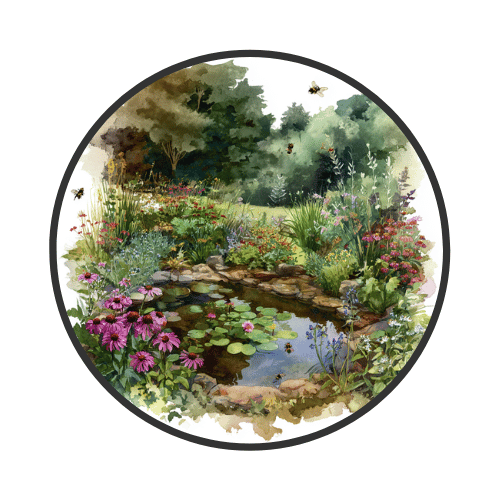
We feel strongly about supporting this wildlife and have purposely made choices in our yard to make wildlife feel welcome. We practice sustainable practices such as using water-wise landscaping, collecting rainwater on the roof of our potting shed that sustains a living roof and having rain gardens at our downspouts that maximizes any rainfall we have.
We have chosen not to use chemicals in the yard and try not to disturb the soil to ensure the mycelium network can communicate with all of the plants so they share nutrients. We have sought to grow native plants because they have a head start on surviving in the conditions and are the first steps of the wildlife food chain. We have many flowers to attract native pollinators, spread wildflowers, and let them go to seed. We desperately need these pollinators; otherwise, our food chain would disappear without them.
We don’t remove leaves from our flower beds, but we leave them both as a natural mulch and as a place for wildlife to take cover and have their young. We have birdfeeders, hummingbird feeders, bird baths, and a pond.
The secret to our garden is balance. We want our yard to be a welcome place for wildlife, but not so much that they become destructive. As we have been purposeful in our choices to support wildlife, we have experienced a connection between nature and us.
We have had bee visitors of all sizes and varieties. My favorite to watch is the bumblebees as they lazily move from flower to flower. In Utah, we have over 1,000 different varieties of bees. We've even discovered homes made from leaves by leaf-cutter bees in our yard.
We placed some praying mantis egg sacks in our yard and were rewarded with a male and female returning to mate and lay their eggs. Praying mantises eat moths, mosquitoes, roaches, flies, and aphids. We also saw many dragonflies, which are predators of pest insects. Dragonflies need water to lay their eggs, so our pond has become a dragonfly nursery. We have lots of mushrooms each year, a sign of healthy soil. Fungi and bacteria are the building blocks of good soil. While plants can’t break down some of the nutrients in the soil, fungi and bacteria can, allowing plants to thrive and return sugar to the soil through photosynthesis.
We've had many sightings of beautiful butterflies and dragonflies. The Great Salt Lake is along the migration path for thousands of birds, which are endangered due to habitat loss and climate change. Migrating birds travel at night, and light pollution can severely impact them. You can track the number of birds that travel over your house each night. We've enjoyed the songbirds, which add to the sensory experience of our yard.
Having a wildlife oasis has been hugely rewarding for us, and we will continue our efforts in the future. Wildlife corridors are a critical part of conservation, and it is rewarding to know we are doing something positive for nature in our tiny little way.