
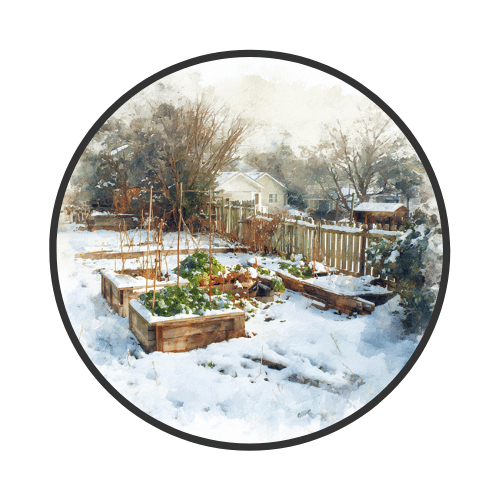
Often, in the context of gardening, we think of winter as just a period of dormancy. Which it is, but in the Western United States, where I live, what happens in Winter has a huge impact on everything in the summer. Our water supply mostly comes from the previous winter’s snowpack. Without the winter storms and snowpack, we wouldn’t survive. We wouldn’t be able to grow crops or have lawns, which is vital to survival in the West. While the East Coast receives sufficient rainfall throughout the year, the West does not and relies on 75% of its water from snow. Not only do snowboarders and skiers cheer with each winter storm, but we all breathe a collective sigh of relief when we hear the snowpack was good and we won’t be in a drought.
Snow is a valuable winter blessing. As the mountain snowpack melts, it fills reservoirs, rivers, and streams, bringing water to all things living in the valley below, sustaining life through the hot, dry summer.
Snow keeps the Earth cool. Not only does it provide a protective layer to the ground, but it also reflects radiation from the sun that the Earth would otherwise absorb. The whiter the snow the bigger the reflection. It helps regulate the Earth’s temperature! White snow reflects back 80-90% of sunlight, where trees, plants, and soil only reflect 10-30%.
Snow acts as an insulating blanket to the organisms it covers. I have found that in years where the snow load has been good, more plants return in the spring.
In winter, the earth provides so much for us, and winter conditions set us up for a successful harvest the following year. Germination of seeds happens best with the aid of cold and snow. When water freezes on the shell of the seed and then thaws, this breaks down that shell and allows the seed to start. This process is called cold stratification.
People still grow crops in the winter and have a variety of ways to extend the growing season. When employing these methods, be sure to keep a few things in mind.
-
When growing winter crops, pick the sunniest spot you can find. Having southern exposure will help your plants get as much sunlight as possible.
-
Be sure to prepare the soil and make sure it has good drainage. Winter soil can retain moisture and can subject your plants to root rot.
-
Carefully select plants that will do well in your area and are particularly resistant to the cold.
There are several ways to extend your growing season they include:
-
Cold Frames - Essentially a box with a window. This will protect your plant from the weather while still allowing for light. They act as a small greenhouse. To reduce heat loss, position the north end of the cold side against a house. You want it to be small enough to easily reach all the plants and tall enough to allow for the height of your plant. It is best to have the window at a slope to provide maximum sunlight to the protected area.
-
Row Covers - If you live in an area where it doesn’t get too cold very often, you can probably get away with row covers. These fabric covers protect the plant from light frosts and are a way less expensive option.
-
Hoop Houses and Greenhouses - Both hoop houses and greenhouses provide a controlled environment for growing and protection from the cold and elements. Hoop houses are more semi-permanent, but can keep the growing area protected from the burn of the sun while still maintaining the light.
-
Cloches - These are great at protecting individual plants and can be as simple as a milk jug upside down, or they have ones called wall of water that a cloche is filled with water and it absorbs the heat during the day adding a layer of insulation to the plant at night.
Remember that not only do temperatures impact plant growth, but hours of sunlight are important too. Once you are below 10 hours of daylight, your plants will become dormant until the length of the sun in the day takes them out of dormancy.
Good luck, happy Winter gardening, and be thankful for the snow!