
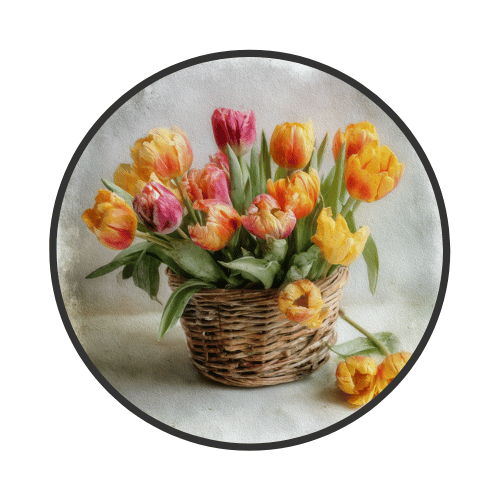
Tulips are more than just beautiful flowers—they're vibrant storytellers of seasonal change. Every year, I eagerly anticipate those first glimpses of green, spear-shaped shoots pushing through the earth, sometimes even piercing through lingering snow.
But did you know these stunning flowers have a history as colorful as their petals? Starting in the 1600s, tulip bulbs were so coveted that their value rivaled today's cryptocurrency prices—a wild economic phenomenon that would make modern investors' heads spin!
Originally from Central Asia, tulips found their ultimate home in the Netherlands. What began as a simple flower became a cultural obsession. Cultivators competed to create the most intricate petal designs, the most unusual color combinations, and the most precisely timed blooms. This wasn't just gardening—it was an art form bordering on madness.
The "Tulip Mania" of the Dutch Golden Age was unlike anything seen before. Wealthy individuals would trade entire estates, herds of livestock, and substantial fortunes for a single rare bulb. Imagine spending your life savings on a flower—hoping it would multiply and make you even richer! People believed these delicate bulbs could be their ticket to unprecedented wealth.
But like many speculative bubbles, this one burst spectacularly. Families who had invested everything watched their fortunes crumble as tulip prices crashed. Sound familiar? It's a tale of human nature—our perpetual dance between desire, beauty, and economic speculation.
Yet, there's something profoundly human about this obsession. In a world of digital currencies and abstract investments, there's a raw, tangible joy in owning something living—a flower that symbolizes hope, that literally grows and blooms before your eyes. The unique colors, the delicate petal structures, the promise of beauty emerging from winter's darkness—these are investments of a different kind.
I'll take a tulip over a Bitcoin any day.