
Meet The Kidneys

Meet The Kidneys
01

Meet The Kidneys

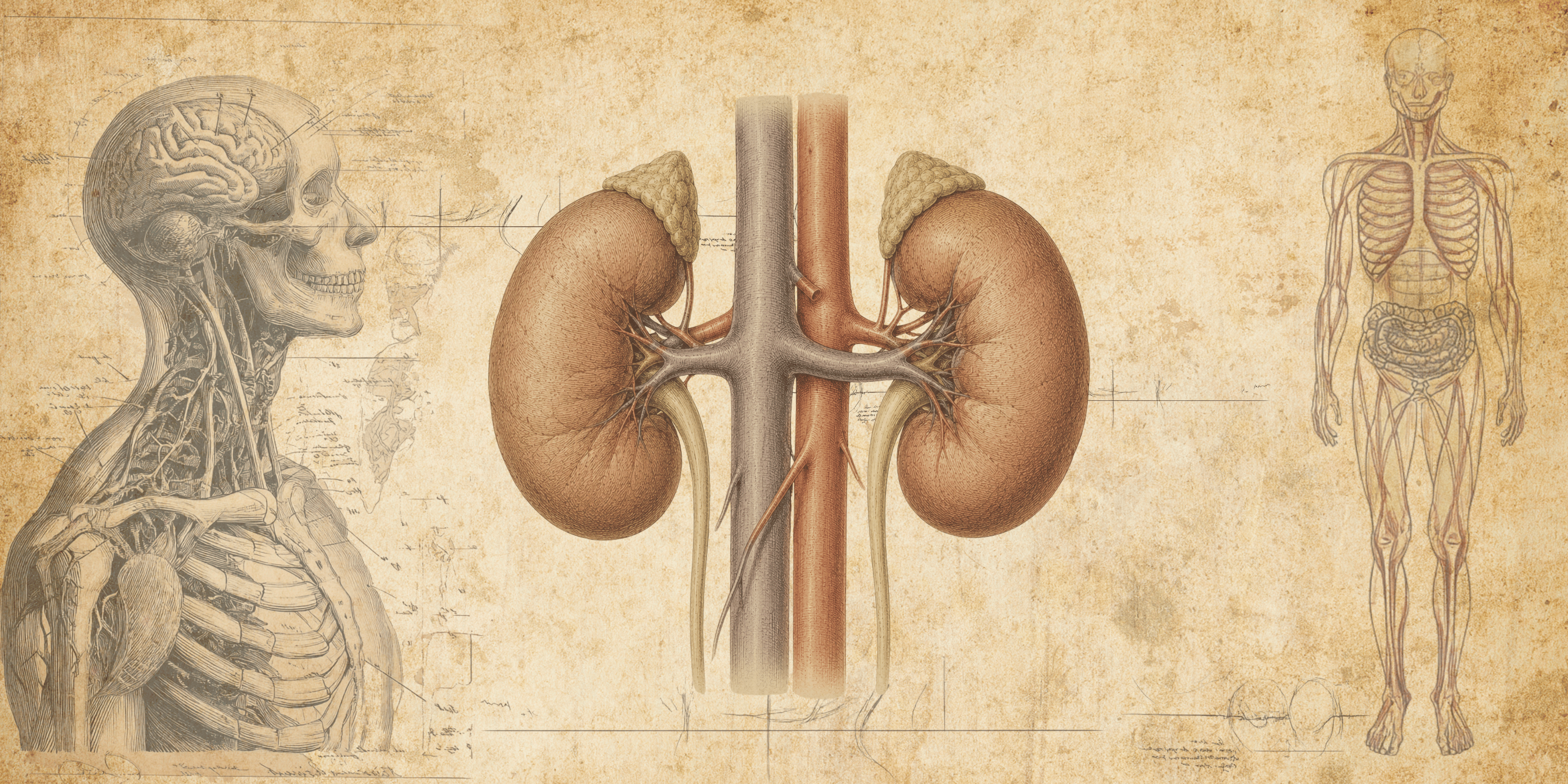
The kidneys are about the size of your fist, with each one measuring roughly 4 to 5 inches long. Most people have two kidneys, located on either side of the spine just below the rib cage, where they are partially protected by the lower ribs and surrounded by cushioning fat. Together, they weigh less than a pound. Their primary role is to filter the blood, but they also perform many other vital functions that help keep your body healthy and in balance.

The kidneys continuously filter your blood, removing waste products and excess water while returning important nutrients, electrolytes, and fluids back into circulation. They help regulate fluid balance, maintain healthy levels of minerals such as sodium, potassium, calcium, and phosphorus, and support a healthy acid-base balance. The kidneys play an important role in maintaining healthy blood pressure by helping regulate fluid volume and producing hormones that help regulate blood pressure. They activate vitamin D, allowing your body to absorb calcium and support healthy bones. They also produce erythropoietin, a hormone that signals the bone marrow to make red blood cells. In addition, the kidneys help eliminate certain medications and metabolic waste products through urine while carefully conserving the substances your body still needs. Your kidneys help maintain your body's internal environment, making them among the most remarkable and essential organs for overall health.

02

Anatomy & Function

The kidneys are two bean-shaped organs located just below the rib cage on either side of the spine. Each kidney is about the size of a fist, and together they make up one of the body's most important filtration systems. Although they're best known for producing urine, the kidneys perform many essential jobs that help keep your body balanced and functioning properly.

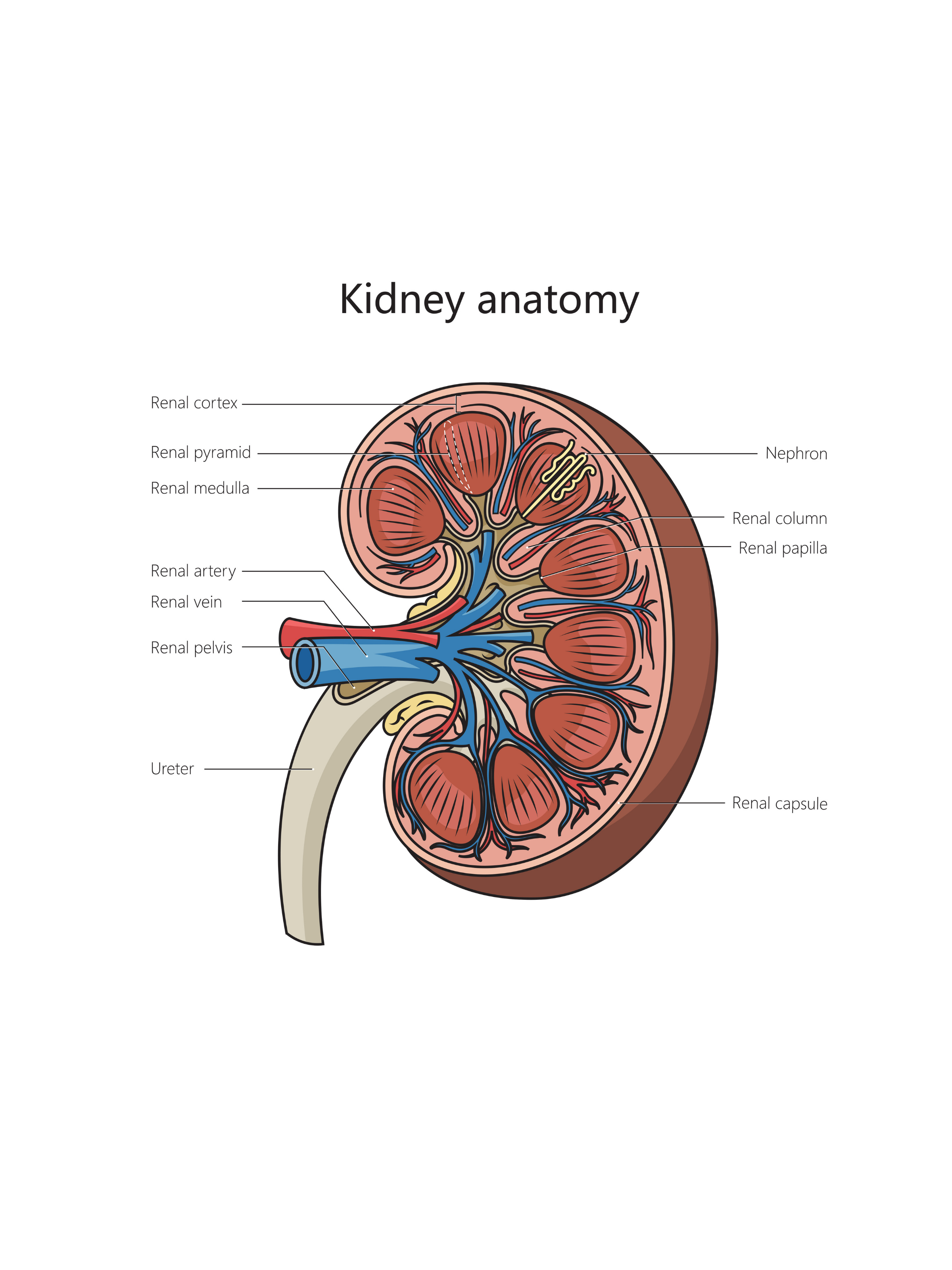
There are many important parts of the kidneys, each with a unique role. The renal cortex is the outer layer of the kidney where blood filtration begins. Just beneath it is the renal medulla, which contains cone-shaped structures called renal pyramids that help concentrate urine and regulate water balance. At the center of the kidney is the renal pelvis, a funnel-shaped chamber that collects urine before it travels to the bladder through the ureter. Blood enters each kidney through the renal artery, where it is filtered by millions of tiny filtering units called nephrons. These remarkable structures remove waste products while returning water, electrolytes, and other valuable substances back into the bloodstream. Once filtered, clean blood leaves the kidney via the renal vein and continues circulating throughout the body.

Every part of the kidney works together like a highly efficient recycling and filtration system, constantly monitoring your body's fluids, minerals, and waste products to help maintain a healthy balance every minute of every day.

01

Meet The Kidneys

The kidneys are about the size of your fist, with each one measuring roughly 4 to 5 inches long. Most people have two kidneys, located on either side of the spine just below the rib cage, where they are partially protected by the lower ribs and surrounded by cushioning fat. Together, they weigh less than a pound. Their primary role is to filter the blood, but they also perform many other vital functions that help keep your body healthy and in balance.

The kidneys continuously filter your blood, removing waste products and excess water while returning important nutrients, electrolytes, and fluids back into circulation. They help regulate fluid balance, maintain healthy levels of minerals such as sodium, potassium, calcium, and phosphorus, and support a healthy acid-base balance. The kidneys play an important role in maintaining healthy blood pressure by helping regulate fluid volume and producing hormones that help regulate blood pressure. They activate vitamin D, allowing your body to absorb calcium and support healthy bones. They also produce erythropoietin, a hormone that signals the bone marrow to make red blood cells. In addition, the kidneys help eliminate certain medications and metabolic waste products through urine while carefully conserving the substances your body still needs. Your kidneys help maintain your body's internal environment, making them among the most remarkable and essential organs for overall health.

02

Anatomy & Function

The kidneys are two bean-shaped organs located just below the rib cage on either side of the spine. Each kidney is about the size of a fist, and together they make up one of the body's most important filtration systems. Although they're best known for producing urine, the kidneys perform many essential jobs that help keep your body balanced and functioning properly.

There are many important parts of the kidneys, each with a unique role. The renal cortex is the outer layer of the kidney where blood filtration begins. Just beneath it is the renal medulla, which contains cone-shaped structures called renal pyramids that help concentrate urine and regulate water balance. At the center of the kidney is the renal pelvis, a funnel-shaped chamber that collects urine before it travels to the bladder through the ureter. Blood enters each kidney through the renal artery, where it is filtered by millions of tiny filtering units called nephrons. These remarkable structures remove waste products while returning water, electrolytes, and other valuable substances back into the bloodstream. Once filtered, clean blood leaves the kidney via the renal vein and continues circulating throughout the body.

Every part of the kidney works together like a highly efficient recycling and filtration system, constantly monitoring your body's fluids, minerals, and waste products to help maintain a healthy balance every minute of every day.

Supporting Systems and Interactions

The human body is a marvel of interconnected systems, each playing a vital role in maintaining balance, health, and vitality. While we often think of the body's organs and processes in isolation, the truth is that no part functions alone. Every system relies on and influences others in a delicate dance of cooperation.

When one system is compromised, others often compensate or respond, illustrating how deeply intertwined all functions are. The body, then, is not just a collection of parts, but an integrated whole, where every aspect plays a crucial role in maintaining the flow of life, energy, and healing. Understanding this interconnectedness allows us to approach health holistically, nurturing not just individual parts, but the whole person.

My kidneys are strong, balanced, and resilient.

Fun & Interesting Facts

  • Your kidneys filter about 45 gallons of blood a day, removing waste while returning the water, nutrients, and minerals. 
  • Each kidney contains about one million tiny filters. 
  • You can live with only one kidney. 
  • Your kidneys help create red blood cells. 
  • Your kidneys activate Vitamin D by converting it into calcitriol. 
  • Your kidneys are master recyclers. 
  • Your kidneys are constantly checking blood chemistry, measuring and adjusting levels to keep your body in balance. 
  • Your kidneys receive about 20% of your heart's blood output every minute. 
  • Kidneys make up less than 1% of body weight.

What is necessary for the optimal health of this system? 

Achieving and maintaining a balanced, healthy life requires a holistic approach that recognizes the complex interplay between nutrition, lifestyle, the use of herbs and supplements. Each of these elements plays a unique yet interconnected role in supporting the body's intricate systems.

Together, nutrition, lifestyle, and herbal support create a synergistic approach to health. They nurture the body as a whole, and support the body’s natural ability to heal, adapt, and flourish. Understanding the role each of these elements plays allows us to make more informed choices that contribute to lasting well-being.

Supporting Recipe

A circular icon displaying a tall glass filled with an orange-colored beverage and ice. It is garnished with orange slices and a lime wedge, with a halved coconut and green leaves sitting nearby.

Orange Dream Homemade Electrolyte Drink

Hydration is one of the simplest and most important ways to support healthy kidney function, and replenishing electrolytes helps your body maintain the proper fluid balance your kidneys work so hard to regulate. This refreshing Orange Dream Electrolyte Drink combines naturally hydrating coconut water with citrus, minerals, and healthy fats to help support hydration while providing key electrolytes, including potassium, sodium, and magnesium. It's a delicious way to nourish your body after exercise, time in the heat, or anytime you need a refreshing boost. 

Serving Size: 1
Yield: 16oz

Time: 5 Minutes

Continue learning & exploring

Know What You Are Drinking

Different Water Types Defined

Do You Really Need to Cleanse to Detox?

The word detox shows up everywhere in wellness marketing, from flashy juice cleanses and restrictive diet plans to “quick fix” detox kits.

A Comprehensive Guide to Your Endocrine System

Introduction to the Endocrine System

Homemade Electrolytes

What Is An Electrolyte? and more!

Explore These Supporting Products

A circular icon of a photograph of Shae our Customer Service Director & Social Media Manager

About The Author

Shae, our Customer Service Director and Social Media Manager, has been with RidgeCrest since 2016. Shae is a licensed massage therapist, and guides the customer care team, is our culture caretaker, and serves as our creative oracle across social media, blogs, and meditations. She describes herself as creative, thoughtful, nature-loving, compassionate, and nurturing. Her favorite herbs are Ginger and Lavender, and she proudly recommends SereniZen® (formerly Anxiety Free), PhysiQOL™, SinusClear®, and Belly Be Happy®.

Click to meet the rest of the team.

Learn More

Disclaimer: This content is for educational purposes only and is intended to support the understanding of an already healthy body. It is not intended to diagnose, treat, cure, or prevent any disease. If you have or suspect a medical condition, or are considering changes to your health routine, please consult a licensed healthcare professional. This information has not been reviewed or approved by the Food and Drug Administration (FDA).

Hello & Welcome

We believe people find us when they are meant to. Welcome to RidgeCrest Herbals, a small family-owned herbal supplement company based in Utah, and doing this work since 1994!. If you are new here, our content is written by real people on our team and inspired by our almanacs, customer swag, and the everyday conversations that fuel our love of herbs and helping others. We are a fun bunch who care deeply about sharing what health and wellness means to us in real life. We hope you stick around, explore our award-winning products and wellness almanacs, and get to know our company and team a little better.