
by Matt Warnock, RidgeCrest Herbals
Matt Warnock is the second-generation owner of RidgeCrest Herbals, makers of condition-specific herbal remedies for a variety of health needs, headquartered in Utah. He holds two patents in herbal medicine, and co-authored Rethinking Medicine: Harmonizing Science and Herbal Tradition. He has a law degree (JD) and an MBA, and was a litigator in Silicon Valley before joining the family business in 1994.
Introduction
Healthcare is failing. Healthcare has a systemic problem: costs are rising rapidly; perceived quality of care is declining; and public health metrics certainly aren't keeping pace with costs. Chronic disease is rising at alarming rates. Much higher spending is not buying better health.
Doctors can’t fix it. Most doctors aren’t trained much in basic nutrition, let alone economics, politics, law, philosophy, and organizational behavior. Most doctors take their responsibility to patients seriously, but 80% are employed by corporations that answer to shareholders, not patients. Doctors who understand the conflicts of interest inherent in the system have rarely been taught or even considered a better way. “This is the way the system is,” they say. “What can I do about it?”
Root causes. Lots of folks try to provide better service at lower cost. But on the whole, the system is not improving; it’s getting worse. In Walden (1854), Henry David Thoreau wrote that “There are a thousand hacking at the branches of evil to one who is striking at the root." Most of us can’t even see the roots of our current health care crisis—they lie in human nature, and in the assumptions and incentives we have built into the system. To change the outcomes, we need to fix these assumptions and incentives. We need to channel human nature in more positive directions. It can be done, but it isn’t a simple or easy fix.
Methods. Here we’ll trace the problems back to their source and show how better solutions could be built on stronger foundations, because health care does not exist in isolation. We’ll begin by looking at the fundamentals of any just society: how we treat each other, and how we make and enforce laws.
Freedom and responsibility
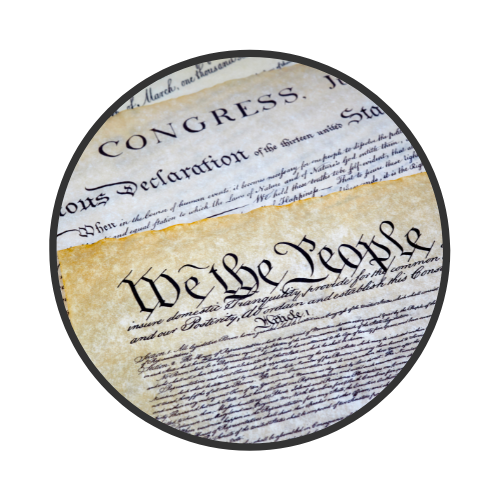
Is all mankind created equal? In the Declaration of Independence, every signer unanimously declared it a “self-evident” truth that all mankind are created equal. This is an astonishing declaration, especially given the fact that 73% of them (41 of 56) were slave-owners during their lives, and most probably held slaves when they signed. How could slave-owners honestly believe that all men are created equal? And is human nature any different now, or are the same forces of good and evil still at play today? Clearly, the founders meant we have equal rights and human value, not that we are equally blessed with opportunities or success. But in practice, our rights weren’t obviously equal then, any more than they are today. Equality was a dream, a goal—but, as they saw it, the only sure foundation on which a fair legal system could be built.
Equality is self-evident. Equality is a really simple idea: either we’re all of equal value at law, or we’re not. Equality is the foundation of mutual respect, trust, and cooperation. If we all have the same rights and human value, no one can justly complain of unfair treatment. More importantly, if we honestly believe others have the same right to life, liberty, and happiness that we do, we’d better start treating them that way. The need for equality is still self-evident today in that: 1) it’s simple and easy (in principle) to apply; 2) it’s fair to everyone; and 3) it’s much better than the alternative.
The ugly alternative. Those who claim special privilege (by birth, race, learning, merit, skill, wealth, or otherwise) can’t complain if others disagree, or claim their own. Inequality breeds conflict, and conflict breeds violence. This is the natural world: the law of the jungle; a perpetual game of ‘king of the hill’; Nietzsche's ‘will to power.’ My tribe is always better than yours, and ours is always better than theirs. It may be natural (like entropy or chaos), but it’s also violent, inefficient, antisocial, and profoundly unjust. Hobbes wrote in Leviathan that nature is a “war of all against all” and life in it is “solitary, poor, nasty, brutish, and short.” Predators will always prefer the dog-eat-dog world; but the rest of us want more out of life—and equality is the only road out of perpetual conflict.
Ethics. The Golden Rule is equality in practice: treat others as you want to be treated. Every war, crime, wrong, fraud, or injustice begins with one unequal idea: “my wants and needs matter more than yours.” We say we can’t legislate morality, but we can and do. Murder, theft, mayhem, fraud, and more are all failures to act according to minimum moral standards—and they all hurt others, violating their equal rights. The Golden Rule crosses all cultural, political, and religious boundaries—it’s the basis of all human ethics at every level. Ethics isn’t a nice-to-have—it’s a must-have for any civil society.
Belief is free. We can’t force belief. The mind is beyond laws, but actions are not. Controlling immoral actions, while protecting freedom of thought and speech, is always a challenge. Where actions hurt others, the line is easy to draw. But are we really hurt if someone just disagrees with us, and says so? There can be no real discussion or debate when victimhood becomes the trump card in every conversation. Free speech (not just belief) is essential to a free society. If we don’t want other beliefs, religions, politics, or economics forced on us, we can’t force them on others—even if we’re in the majority, and no matter how right we may think we are. Liberty requires defending the right of others to be wrong—which is how we almost always see it.
Equal rights have equal limits. If we all have equal rights, then the natural limit of those rights is the equal rights of others. It follows that any threat to others' rights is a threat to our own (which are exactly the same), and protecting those equal rights is paramount. If we don’t defend the equal rights of others, even or especially the unpopular, we won’t have our own for very long. The Declaration of Independence argues that the entire and only purpose of any government is to protect our rights, deriving its just powers from the consent of the governed, and that whenever a government fails to protect our rights, it can and should be altered or abolished.
All of us are different. We all have equal rights, but each of us also has unique needs, wants, experiences, skills, circumstances, and resources. We are not the same, and no one solution works for all of us. We need options to choose from, and the liberty to choose them. We are responsible for our choices, and must respect the rights and choices of others. One size, party, plan, diagnosis, treatment, or standard of care will never fit all—we’re far too different. Some want mansions and supercars; others a hut and a surfboard. Some want nuclear imaging, others want herbs and exercise. As with happiness, health is where you find it. As Nietzsche puts it in Thus Spake Zarathustra:
“This is my way—where is yours?" Thus I answered those who asked me "the way." For the [one, true, correct, best, or only] way—that does not exist!”
Liberty means responsibility. Negligence, fraud, and malice have always been with us—only the details change. When individuals or organizations harm others, law must be enforced both to right the wrong, and to deter future wrongdoing. Law and justice are always needed, but the better they serve, the less they will be needed. Madison wrote, “If men were angels, no government would be necessary.” Cicero said, “The foundation of justice is trust.” Citizens who police themselves can be trusted with liberty; those who need policing can’t. This is why the founding fathers, who disagreed about religion, all agreed that civil society requires a moral people—it can’t exist without it. People of goodwill are the foundation of every civil society, and predators (who don’t want equality or justice) are its enemy. The fewer, better, and surer the laws, the fewer predators we will need to police. But because each of us can be tempted, public policy that removes temptation and enforces justice is vital. When society turns a blind eye, predators and injustice grow very quickly.
Knowledge and belief
What is knowledge? One of philosophy's oldest questions remains unanswered: what do we know, and what do we merely believe? There is no magic alarm light or bell that goes off to tell us when we have arrived at the truth. We learn one thing today; tomorrow we may learn something new, which may confirm, modify, or even completely overthrow what we ‘knew’ yesterday. After 2500 years, Western philosophy’s best answer is that knowledge is ‘justified true belief’ (JTB); or, in reverse order: 1) ordinary belief; that also happens to be 2) objectively true; and 3) justified by evidence. We could go into all the limitations on why we can’t be objective, and what evidence we don’t have—but the simple fact is that all of our vaunted ‘knowledge’ is just simple belief or opinion, with more or less evidence to support it.
Tell the truth. We never know what is objectively true—only what appears true right now. And that appearance will differ from one individual to another, depending on our point of view and the evidence we can see and believe. While we need to allow ourselves and others the grace to be wrong, we also need to hold to the truth as best we see it. Trust is the basis of all commerce and all other human relationships, and any breach of trust will be slow and painful to repair, if it can be repaired at all. Lies and deceit do not become us as humans, and do not help us attain just goals. The end never justifies the means. Quite the opposite: the end is only as good as the means. Unjust means tarnish the end goal and make it unworthy. A win achieved by deceit and harm is a goal forever unearned and tainted.
Science is evidence, not knowledge. Science is often misunderstood. Science doesn’t ‘prove’ anything—it only accumulates evidence to support or dispute specific ideas. Consider the ‘white swan’ problem. Juvenal used the Roman proverb “a bird as rare as a black swan” to describe something that did not exist—much as we would say rare as hens’ teeth, or unicorn eggs. In 1697, a Dutch explorer discovered black swans in Western Australia. All the swans observed prior to that time were not enough to prove that ‘all swans are white.’ Karl Popper’s Logic of Scientific Discovery showed (in 1934) that science is incapable of positive proof, and the best it can manage is falsifiability—that is, showing by contradiction what can’t be true. In any event, science is just an investigative tool, and when humans or institutions adopt it, all the foibles of those humans and organizations are still present: politics, greed, budgets, profits, status, power, etc. Institutional science is no more foolproof than any other human institution, but it has a vested interest in appearing so—funding often depends on it. Science without ethics is a very dangerous tool. Like money, science is a powerful tool for either good or evil. We must be responsible enough to ensure it is used for good.
Science changes. Innovation always happens at the fringes, not the center. Thomas Kuhn argued that science progresses through a series of paradigm shifts—and there are very real differences between ordinary day-to-day science and disruptive or revolutionary science. Ordinary science confirms and defines, while disruptive science subverts the current, soon-to-be former, paradigm. Some of yesterday's most outrageous ideas eventually become today's near-universal scientific consensus (like quantum theory). Today's consensus becomes tomorrow’s outdated ideas. No one knows which ideas will be discarded or reversed, or when, or by what. Only one thing is certain—if we lock in today’s scientific consensus as incontrovertible truth, and suppress any other ideas as ‘misinformation’, tomorrow’s innovations and new ideas will be stillborn—killed even before they arrive. Progress will stand still.
Humans want freedom. Everyone’s experience is different, and we each have literally hundreds of logical fallacies, traps, and cognitive biases that can affect our individual perceptions and beliefs. To some, certain truths are self-evident—to others, they are not. One of the most rankling things to the human spirit is being forced to accept or comply with something we just don’t believe. Whether we are forced to accept a state religion or the color of our living-room curtains as specified in our condominium owner’s agreement, we don’t always accept others’ opinions as our own, just because a majority of others says so. As Mahatma Gandhi said, “Even if you are a minority of one, the truth is the truth.”
Freedom is the best policy. Since our hold on “the truth” is so fleeting and ephemeral, it is all the more important that we not force our so-called truths (really just beliefs) on others. Whether those beliefs are social, political, economic, religious, scientific, or otherwise, we have no business forcing our ideas on others, or letting them force theirs on us. When we agree, we can do things together that we could not do alone: build a commune, a scientific research laboratory, or a school of music or the arts, a community, or a nation, to explore our common interests. But we should NOT be forcing others to accept (or pay for) our own pet beliefs, no matter how important they may seem to us. To do so violates the Golden Rule and the fundamental equality of all mankind.
Economics
Win-win wins. In a truly free market, with multiple competing buyers and sellers, where no one is forced to buy or sell, every transaction must be win-win—or someone will walk away to find a better deal. Economics and trade are by definition a win-win game. Playing it with a win-lose (or worse yet, lose-lose) strategy is never optimal—in the long run, you will lose to those with a better (win-win) strategy. This is especially true in any business with “customers”—people whose “custom” (of repeat buying) drives your business. You need their goodwill and willing repeat purchases. If you force them to buy from you, they will hate you for it—and they will quit buying from you as soon as they can.
Organizations are human too. It has been suggested that a corporation has no social responsibility except to make a profit. That idea is wrong. Any organization is just a group of humans, and only acts by and through humans. As a group, it has greater power than an individual—for both good and ill. The same moral rules that apply to humans apply to organizations too—but because they have more power, they have an even higher duty of care. Negligence or petty malice that might be ignored in an individual, can’t be tolerated at a corporate, community, regional, national, or global level. Corporations, communities, and nations must apply the Golden Rule too.
Human (not shareholder) primacy. Win-win players win happy customers, happy staff, happy communities, and a reasonable (not extortionate) return for their investors, who should (must) be content with that. Organizations that put shareholders first will have unhappy customers, unhappy staff, angry communities, and eventually, no value for shareholders. Shareholder primacy leads to failure—it puts the fox in charge not just of the henhouse, but of the entire farm. Shareholders who focus only on returns are short-sighted. When the ship's owner plays captain, the ship runs aground. If all humans are equally important—customers, staff, suppliers, communities, shareholders, and the world at large—we’ll choose better than if we believe the “customer is always right” or worse yet, “the shareholder is always right.”
All competition is not the same. Competition spurs innovation, improvement, customer service, and value. But two brothers vying to please their mother is one thing; two enemy soldiers fighting for a pistol in a trench is another. One is win-win—a mother’s love is undivided. The other is win-lose (if it ends quickly), or more likely, lose-lose. One brings out the best in us, while the other brings out the worst. Competition can be just as anti-competitive as monopoly–in fact, most monopolies are built and maintained by anti-competitive competition.
Monopoly is bad business. Monopoly power is the absence or restriction of good, healthy competition. It drives high monopoly prices and profits, which is why unethical sellers always want to corner and control markets. Monopoly power also stifles improvement, innovation, customer service, and value. Why are the DMV, IRS, post office, and utility companies all notoriously hard to deal with? Each is a monopoly. Monopoly is a win-lose strategy, carried to the winner-take-all extreme. For any existing monopoly, its top priorities are always: 1) protecting its monopoly status; and 2) maximizing short-term profit.
Monopoly corrupts. Adam Smith’s Wealth of Nations observed in 1776 that monopoly power doesn’t usually last. People won’t tolerate it and will find a way around it—unless it’s enforced by law. Smith was writing about the British East India Company (BEIC), which was then 176 years old; it lasted another 100 years, exploiting the British people and colonies alike. Most of the abuses that drove the American Revolution protected the BEIC monopoly: the Stamp Act, the Navigation Acts, the Boston Tea Party, quartering of soldiers, even taxation without representation. When a monopoly is protected by law, government is corrupted to protect the monopoly—it’s as inevitable as night following day. Monopolies produce loads of cash with which to buy politicians, media, and anyone else who can help protect the monopoly.
Monopolies need price controls. Some monopolies are necessary: you can’t have dozens of sewer companies digging up your street to compete for your business. In those cases, we have a Public Utilities Commission to control monopoly rates—but we still get bad service, because that’s what monopolies do. But where monopolies are required, price controls are a must.
Every government is a monopoly. Every government is exclusive and enforces its laws by violence—even lethal force. When governments do compete, they do so by arms—we call that war. Recognizing government for what it is—a necessary (but limited) monopoly on the use of force and violence—is essential to understand it. Government must be carefully limited in scope, because it has all the characteristic flaws of any other monopoly—multiplied by violence. The wider and deeper the government feeding trough, the more noses will push their way in. Taxation without representation is wrong primarily because it is a monopoly without either price controls or the consent of the governed.
Purpose of government. Government’s sole purpose is to protect and preserve our rights—and when it fails in that task, it is our right and duty to alter or abolish it. This ability to replace it is an essential, self-evident human right—either at the ballot box, or in the streets. If the government controls the ballot box, either by preventing free and fair elections, or by letting politicians choose voters (gerrymandering), rather than letting the people choose their representatives, then that government is by that very action no longer legitimate, and revolution in the streets eventually becomes inevitable. Elections have consequences—but tainted elections have even worse ones. Gerrymandering (like other forms of non-free elections) is taxation with only the appearance, not the reality, of representation and the consent of the governed. It must never be tolerated.
We need health freedom
Why health freedom? What do equality, liberty, knowledge vs belief, ethics, competition, and monopoly have to do with health care? Everything. Health is perhaps the single biggest factor in human happiness or misery, and we all need the freedom to pursue our own health needs in our own unique way. We can’t do that when all of our health options are largely determined by others, and for their benefit, not ours: employers, insurers, government agencies, benefit managers, monopolists, and more.
Health care isn’t a free market. When we are sick, scared, unconscious, or dying, we can’t really shop around. Jesus said, “What will a man give in exchange for his soul?” Or for that matter, for life or health? Health care offers real opportunities for exploitation—and they have been thoroughly exploited. But the solution to this non-free market problem can’t be to 1) create a monopoly to control supply (that makes it worse, not better) and then 2) not even try to control prices (even worse). The current solution is failing miserably, as any monopoly will.
Hippocrates was right. The Hippocratic oath, taken by doctors and nurses, requires them to put patients first. Guess who never takes that oath? Corporate executives, health insurance companies, benefit managers, big pharma, manufacturers, hospital corporations, and many, many more. When 80% of doctors and nurses work for corporations, where do they owe their allegiance? Even when their heart is in the right place (it usually is), their paycheck isn’t, and patients suffer. When they are ordered to see more patients in less time and use standard treatments, patients lose. Like patients, doctors also need more options and the liberty to choose them when appropriate.
Bad medicine is killing us. Medical errors (~250k/yr) are the third leading cause of death in the US, with drug side effects (no error, 106k+/yr in hospitals alone) and hospital infections (100k/yr) not far behind. Add addiction, overdose, and medical bankruptcy, and medicine’s share of human misery increases. Together, medicine easily kills more people than cancer (~400k/yr), and is second (perhaps) only to heart disease (~600k/yr). Clearly, we’re doing something wrong—and corporate profit is to blame.
Health care is a monopoly. Our current health care system was created by 1) lockstep standardized medical education; 2) medical licensing; and 3) pre-market approval (product licensing). All are government-sanctioned monopolies, created to ensure that only government-approved curricula, people, and methods are allowed. As the corrupt politician Boss Tweed of Tammany Hall said, “I don’t care who does the voting, so long as I do the nominating.” If you control the choices, you control the choice. Government approval turns it into a politicized collective decision rather than an individual question of health, science, or freedom.
Medicine of, by, and for monopolists. In the 1900s, the American Medical Association wanted to reduce the number of medical schools and doctors to protect their fees. They contacted the Rockefeller Institute, which contacted the Carnegie Foundation. Andrew Carnegie and J.D. Rockefeller were the biggest monopolists and ‘robber barons’ of America’s Gilded Age, but really competed only for the title of the richest man alive. Carnegie (the “Steel King”) had recently retired to be a philanthropist; Rockefeller (the “Oil King”) owned Standard Oil, which controlled the oil and petrochemical industries. Simon Flexner headed the Rockefeller (medical) Institute, and he earned his MD from Johns Hopkins, paid for by his older brother Abraham, a schoolteacher who also attended there. Needless to say, they both thought Johns Hopkins was the one perfect model for medical education.
The Flexner Report. At Simon's suggestion and at the Rockefeller Institute's request, the Carnegie Foundation hired Abraham to tour 155 North American medical schools and compare them to Johns Hopkins. Carnegie’s 1910 Flexner Report found five other schools that measured up; about twenty-five more that could be raised to the standard (with enough money); and the rest were marked for death. By 1935, the medical profession was in lockstep, and those who refused to ‘go along’ were drummed out.
Pre-market approval. In 1938, we traded medical freedom (allowed unless prohibited) for a control model (prohibited unless allowed) of pre-market approval, initially with safety testing. By 1959, the Senate was already holding hearings on price gouging by drug companies—but in 1962 Congress made it worse, demanding proof of efficacy too. Prices have been skyrocketing ever since—and more people are dying. Inflation-adjusted retail cost of drugs per capita in the U.S. has ballooned from about $100 in 1960 to over $1100 in 2020—an increase of over 11 times—with no end in sight. (https://www.healthsystemtracker.org/chart-collection/recent-forecasted-trends-prescription-drug-spending/#Nominal%20and%20inflation-adjusted%20per%20capita%20spending%20on%20retail%20prescription%20drugs,%201960-2021, retrieved 2026-08-28)
Safety and efficacy. Congress and FDA talk about safety and efficacy as though they are independent variables—but they’re not. In monotherapy (one disease, one drug, the usual case tested under our ‘modern’ assumptions), safety and efficacy are always a dose-based trade-off: higher doses are more effective, but also less safe. Safety is harder to assess: we can’t ethically or reliably test it in humans, so we’re mostly guessing. Efficacy is easy if you have enough data—but it takes very large groups to test it reliably, especially if the effects are small. As one drug executive quipped when his company’s drug was FDA-approved: “Now the real testing begins.” Currently, about 1 in 3 approved drugs are recalled or get a black box warning. Safety and efficacy risks are not similar—safety risks lives, while efficacy risks only time and money, and depend heavily on the individual, the seriousness of the problem, and the cost of the drug—all individual factors. In addition, all the testing in the world can never answer the real question that patients and their doctors face every day: is it safe and effective FOR ME (not others)?
Effective dose. The center of the dose-response curve is the Effective Dose for 50% of the population (ED50). This is the population peak in the bell curve of drug effects. It’s the usual or average response level—a very important number. It’s where we have the most data about patient responses. But it’s not what we prescribe. No one wants to give a medicine that only works for half the population, so we push UP the dose-response curve to include 80, 90, or even 95% of the population; and because dosage is a logarithmic curve, this may be 10, 30, or even 50 times the ED50. At some point, we start to run into the long tail at the foot of two other curves—the Toxic Dose (TD) and Lethal Dose (LD) curves. The farther we climb the Effective Dose (ED) curve, the more side effects (toxic and fatal) we see. This is why side effects (toxic and lethal) are so common: when we test for statistical efficacy, we select for the strongest, most potent hammers to produce a given effect. Gentle effects usually aren’t “statistically significant,” while stronger ones are far more dangerous.
Drugs, good and bad. In Eastern medicine, superior drugs are those that are safe enough to be taken every day; moderate drugs are less safe; and inferior drugs are those that have to be carefully used under close physician supervision. By that definition, all Western prescription drugs (that sell for hundreds of billions of dollars) are “inferior” drugs. On the other hand, many herbal drugs are very safe and are tonic in nature, helping to support the body’s own regulatory processes, rather than overcome them by force. Of course, they aren’t patentable, and there’s no way to pay for the trials needed to get them approved in the West. So we take them as foods, or as dietary supplements, which by law can’t “diagnose, treat, cure, or prevent any disease.” We know that’s not true; some foods can absolutely heal, just as some drugs can kill. Foods are often good medicine, especially for chronic disease—and public policy should allow them to say so! The distinction in US law between drugs and foods is an artificial and false one: foods like herbs do have powerful health effects (both good and bad), and keeping people in the dark about them is at best a denial of free speech rights and a violation of the right to informed consent about alternatives to approved synthetic drugs. If we say citrus fruit can’t cure scurvy, or vitamin D can’t cure cancer, or folate can’t prevent birth defects, it’s a lie. If the law says it, it’s worse than a lie: it’s a deceitful and unjust law that invites contempt and disobedience.
Portfolio formulation. In addition, Eastern medicine moves DOWN the dose-response curve, combining smaller doses of multiple medicines to achieve additive or even synergistic effects. By using smaller doses in combination, practitioners can achieve a better, safer, more consistent result: people who under- or over-respond to one ingredient are likely to respond more normally to others; adverse reactions are likely to be smaller with a smaller dose; and likely side effects can be mitigated with other ingredients. Meanwhile, the “one disease, one target, one drug” (Paul Ehrlich’s 1906 “magic bullet”) model continues to assume, without a shred of evidence, that there is one best solution for every disease, and continues to ignore the biggest and most complex variable in every medical equation—the patient.
Homeopathy. Homeopathy is another form of ‘alternative’ medicine that was developed in response to the ‘heroic’ medicine that was killing people in the 1700s. Homeopathy is closely related to vaccination in theory. It assumes that “like cures like”, so if a large dose of medicine produces a fever and vomiting in a healthy person, a very small dose will trigger a healing response for the same symptoms. FDA says (without evidence) that homeopathy is ineffective, but 40% of the population of France, and 83% of the population of India (for example) have used it, compared to only 2% in the United States. Homeopathy is remarkably safe and inexpensive. Even if it’s just a placebo (as the FDA says it is), why shouldn’t you be allowed to use it? And what about acupuncture, chiropractic, energetic medicine, and other modalities? Are we really protecting the public, or just protecting the orthodox and established monopoly? If we’re serious about protecting consumer choice in health care, then as we saw before, a threat to any modality is a threat to our individual liberty and choices.
Licensing. If you ask cabbies who can be a cabbie, they’ll say “only cabbies like us.” London cabbies were extensively tested on what they called ‘the knowledge’ of London streets. Then came GPS, Uber, and Lyft, and you could pick the size and shape of your ride, and even whether you like to chat while riding. Prices came down, and service improved. Innovation succeeds where licensed monopoly fails. Doctors and drugs are no different. If we don’t license doctors, won’t people get hurt? Yes, undoubtedly some will. But medicine is currently the second leading cause of death, so let’s not kid ourselves that the status quo is working. Licensing really only enforces orthodoxy and monopoly, not competence. Voluntary certification provides all of the real benefits of licensing, without the monopoly. If you really want to chase out incompetence, publish results and reviews, like restaurants post their menus on sidewalks. Sunshine is an amazing disinfectant. And shouldn’t it really be customers and patients, not other competing sellers, who have the right to decide who can provide services?
Pre-Market Authorization (PMA). PMA is just another form of licensing, but for products, not people. PMA started with new drug safety testing in 1938; we doubled down with efficacy testing in 1962. But the rate of new drug approvals has never significantly changed; it was about 50 per year in the 1930s and 40s, and it is about the same today. The only difference is that it now costs $2.2 billion per drug to win approval–which means each approved drug needs to rake back that much before it ever breaks even. Add in advertising costs (the US and New Zealand are the only countries that allow advertising of prescription drugs), and the breakeven number goes even higher.
Regulation doesn’t work. Regulation fails because it is designed to fail. Regulators take jobs in industry; industry first influences, then captures regulators; regulation gives industry cover (“we followed the regulations”); and distracts from actual harms. In some cases, like the 1986 Childhood Vaccine Act, the law actually makes industry immune from ANY liability for harm. If there’s no responsibility for harm, what’s the incentive to make vaccines any safer than they are now? Regulation favors established players and protects against disruptive innovation. Any industry leader who says “maybe we need regulation” is like Brer Rabbit saying “please don’t throw me in that briar patch!” Big business LOVES regulation! The more, the better! No wonder the US Code of Federal Regulations (administrative agency law) is now many times bigger than the US Code (public laws passed by Congress).
DSHEA is the model. In the 1980s and 90s, FDA tried to ban dietary supplements. They argued that evening primrose oil was an “unapproved food additive” when put in capsules. They conducted an armed raid on Dr. Jonathan Wright’s medical practice, where he was using Vitamin C infusions to treat and cure a variety of diseases. People were fed up with FDA tactics—they wrote more letters to Congress than on any issue since the Vietnam War. The result was the unanimous passage of the Dietary Supplement Health and Education Act (DSHEA) in 1994. Since then, dietary supplements have grown quickly, from about 4000 products to more than 100,000 today (over 3200 per year on average, not 50). Competition and innovation are high, no one is holding Senate hearings on price-gouging, and no one needs health insurance to afford them. And despite the fact that about 70% of the US population uses both drugs and supplements, those “unregulated and unsafe” supplements produce about 5,000 serious adverse event reports (SAERs) per year, while drugs produce over 2 million (a 400x difference). So when the American College of Physicians recommends regulating all supplements like drugs, we respectfully disagree.
Demanding Health Freedom
Health freedom is essential. It’s an innate human right, like self-defense when attacked. Everyone has the innate human right to do what they need to do to protect their own health, so long as it does not abridge the equal rights of others. If I believe drinking the juice from boiled shoelaces will cure me of cancer, that should be my right—and my responsibility, too. But we can’t always treat ourselves, and we often need the help of others. We should also be able to seek out those we believe can help us, whatever we think their qualifications may be. Whoever controls the choices, controls the choice. How many new kinds of alternative practitioners have we allowed over the years? Acupuncturists, chiropractors, homeopaths, massage therapists, naturopaths, physical therapists, and the list goes on and on. How many new specialties and modalities are out there now but can’t (yet) be licensed? Medical marijuana is now legal in most states, but still illegal at the federal level. Magic mushrooms are curing alcoholism and PTSD with a single dose in many cases—yet medical psilocybin is legal in only 3 states, and only under strict licensing. Orphan drugs, orphan diseases, high prices, scarcity, chronic illness, and bad nutrition—these are all symptoms of our government-enforced monopoly system—and the persistent denial of fundamental and inalienable human rights.
What if people waste their money? People waste their money every day on lotteries, gambling, smoking, alcohol, art, books, entertainment, luxury cars, fancy homes, vacations, philanthropy, and a thousand other items every day. In any free economy, “waste”, like beauty, is entirely in the eye of the beholder. One man’s passion is another man’s folly. In a free society with equal rights, we can’t make other people’s decisions for them—but we can intervene (at their request) if they are defrauded or coerced. If we prescreen their choices to make sure the majority approves them, then we have coerced and controlled their choices, and we become the oppressors. That’s not a free society—that’s oppression under the disguise of majority rule.
Government’s job is to protect liberty. We learned hundreds of years ago that forcing orthodoxy and monopoly of belief is a fool’s errand, and NOT a proper function of government. It’s no better when protecting orthodoxy and monopoly in medicine, art, or any other field. If we had as much health freedom as we do religious freedom, we would be far better off. Would some people commit fraud? No more than today. Would people make bad choices? Yes, sometimes, but they would be their choices and their responsibility. We’d also learn faster and innovate more, as we’ve seen under DSHEA. And our health, both individually and collectively, would improve.
Why now? Under COVID, we all saw the lengths to which monopolists will go to protect their monopoly and increase their windfall profits. Whatever the risk may have been, the authoritarian response was certainly over the top. Existing, approved drugs were tried in many places with some success—but the party line was always “there is no cure, wait for the vaccine.” When a drug executive is given a choice between a treatment which is sold only to the sick (say, 5-10% of the population), and a vaccine which is forced on everyone, at government expense and by force, and with no possible liability to the manufacturer, which path would any drug executive choose? This is monopoly thinking at its largest and most harmful scale.
Fred Hart & NHF. Fred Hart owned radio stations in the 1930s. He knew electromagnetic (radio) waves had the power to inform; he also suspected they had the power to heal. When his beloved wife Eva got breast cancer, he sought treatment based on radio waves, and her cancer went into remission. He eventually bought the device and tried to share it with others. The FDA raided his office and home, confiscated the devices, and without the treatments, Eva’s cancer came back; it eventually took her life in 1962. But in 1955, Fred vowed that no one should have to go through what he and Eva had. He created the National Health Federation (thenhf.com) to fight for our right to be healed as WE choose for ourselves, not as the government does. Fred Hart died in 1976, but the organization he founded fights on—the difference is that today, many more people are listening and asking important questions. First among them is this: why do we tolerate a monopoly, especially over our health?
Next steps
We’re organizing a DSHEA-style campaign for true health freedom. When Congress hears from the people in force, the people cannot be denied. As long as companies can profit from disease, rather than health, they will. Until we hold companies to basic standards of human decency, they will do whatever they think they can get away with–and they will do it on the assumption that your retirement plan is more important to you than your life, your health, your kids, or your grandkids. It’s not, and never has been! Let’s tell them so.
Join the National Health Federation (NHF) at TheNHF.com. You’ll get valuable information to help you live better and smarter, more responsibly, and with more health and freedom.
- Replace licensing monopolies (state medical boards) with voluntary certifications.
- End FDA Pre-Market Approval (PMA); enforce responsibility (liability) instead.
- Hold corporations and organizations everywhere to human (golden rule) standards.
- Prosecute malice, fraud, negligence, harm, and corruption wherever possible.
- Create public policy that rewards good behavior, not bad.