
Have you ever stood in the supplement aisle wondering whether you need enzymes, probiotics, or both? You're not alone. These two digestive wellness tools are often mentioned together, but they serve very different purposes inside the body. While both can support a healthy digestive system, understanding what they do can help you make more informed decisions about your wellness routine.
Let's break it down.
First Things First: What Are Enzymes?
Enzymes are specialized proteins that help break down the food you eat.
Think of them as tiny tools that help turn your meals into nutrients your body can use. Without enzymes, your body would have difficulty processing carbohydrates, proteins, and fats.
Different enzymes have different jobs:
- Amylase helps break down carbohydrates.
- Protease helps break down proteins.
- Lipase helps break down fats.
- Lactase helps break down lactose, the sugar found in dairy products.
Your body naturally produces digestive enzymes in the mouth, stomach, pancreas, and small intestine.
Did You Know?
Your saliva contains digestive enzymes that begin breaking down food before it even reaches your stomach!
Where Are Digestive Enzymes Found?
Your body naturally produces digestive enzymes in the mouth, stomach, pancreas, and small intestine. However, certain foods also naturally contain enzymes.
Some examples include:
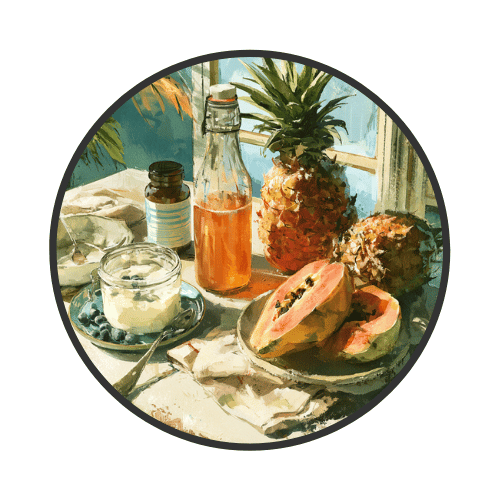
- Pineapple (contains bromelain)
- Papaya (contains papain)
- Mango
- Honey (raw, unprocessed)
- Avocado
- Bananas
- Kiwi
- Fermented foods
Digestive enzymes are also available as supplements, often in formulas that contain a blend of enzymes designed to help break down proteins, fats, carbohydrates, fiber, or lactose.
🌿 Herb Nerd Did You Know?
Pineapple contains an enzyme called bromelain, while papaya contains papain. These enzymes are so effective at breaking down proteins that they have traditionally been used as natural meat tenderizers.
What Are Probiotics?
Probiotics are living microorganisms that help support a healthy balance of beneficial bacteria in the digestive tract.
While the word "bacteria" sometimes gets a bad reputation, your body is home to trillions of microorganisms that play important roles in overall wellness.
These beneficial microbes help support:
- Digestive health
- Nutrient metabolism
- Gut microbial balance
- Immune system function
Probiotics are commonly found in fermented foods such as:
- Yogurt
- Kefir
- Sauerkraut
- Kimchi
- Miso
- Kombucha
They are also available as supplements.
Did You Know?
The human digestive tract contains trillions of microorganisms, collectively known as the gut microbiome.
Enzymes vs. Probiotics: What's the Main Difference?
The easiest way to think about it is this:
Enzymes help break down food.
Probiotics help maintain a healthy gut environment.
Enzymes work directly on the food you eat.
Probiotics support the microbial community living in your digestive system.
Both are important, but they perform very different jobs.
A Helpful Analogy
Imagine your digestive system is a busy restaurant. Enzymes are the kitchen staff preparing and processing ingredients. Probiotics are part of the maintenance and support team, helping keep the restaurant running smoothly behind the scenes.
Both contribute to the overall operation, but their responsibilities are completely different.
Can You Take Enzymes and Probiotics Together?
Yes.
Because enzymes and probiotics have different functions, many people choose to use them together as part of their digestive wellness routine.
Enzymes help your body process food, while probiotics help support a balanced digestive environment.
Rather than competing with one another, they often complement each other.
Which One Should You Choose?
The answer depends on your goals.
If you're interested in supporting the breakdown of food and nutrient absorption, digestive enzymes may be worth exploring.
If you're focused on supporting gut microbial balance and overall digestive wellness, probiotics may be a good option.
For some individuals, a combination approach may make sense because both play unique roles within the digestive system.
As always, it's important to choose products that align with your personal wellness goals and discuss any questions with a qualified healthcare professional.
Why Digestive Health Matters
Digestion does much more than simply process food.
Your digestive system helps your body:
- Extract nutrients from meals
- Support energy production
- Maintain gut health
- Support immune function
- Eliminate waste products
Because digestion affects so many aspects of wellness, it's no surprise that digestive support remains one of the most popular areas of natural health.
Understanding how tools like enzymes and probiotics work is one way to make more informed choices about supporting your body.
Where Does DAO Fit In?
As you learn more about digestive health, you may come across something called DAO, short for Diamine Oxidase.
DAO is an enzyme naturally produced by the body that helps break down histamine, a compound found in certain foods and also made naturally within the body. Histamine plays important roles in the immune system, digestion, and cell communication.
Unlike digestive enzymes that help break down fats, proteins, and carbohydrates, DAO has a very specific job: helping break down histamine in the digestive tract.
Did You Know?
Histamine naturally occurs in many foods, including aged cheeses, fermented foods, cured meats, vinegar, wine, and even leftovers stored for extended periods.
Enzymes vs. Probiotics vs. DAO
Although these terms are often discussed in digestive health conversations, they each serve a different purpose:
Digestive Enzymes
Digestive enzymes help break down the foods you eat into smaller components that your body can absorb and use. They work directly on proteins, fats, carbohydrates, and other nutrients.
Probiotics
Probiotics are beneficial microorganisms that help maintain a healthy balance of bacteria in the digestive tract and support overall gut health.
DAO
DAO is an enzyme that helps break down histamine in the digestive system. Rather than helping digest food itself, DAO focuses specifically on histamine metabolism.
Think of it this way:
- Digestive enzymes help process your meals.
- Probiotics help support your gut ecosystem.
- DAO helps break down histamine from foods.
Each plays a unique role in digestive wellness.
Can You Take Enzymes, Probiotics, and DAO Together?
Because digestive enzymes, probiotics, and DAO all serve different functions, some people choose to use more than one as part of their digestive wellness routine.
Digestive enzymes help process food.
Probiotics help support a healthy microbial balance.
DAO helps break down histamine.
Rather than competing with one another, these tools support different aspects of digestive health.
Frequently Asked Questions
Are enzymes and probiotics the same thing?
No. Enzymes help break down food, while probiotics are beneficial microorganisms that help support a healthy digestive environment.
Can I take digestive enzymes and probiotics together?
Yes. Many people choose to use both because they perform different functions within the digestive system.
Does my body naturally make digestive enzymes?
Yes. Your body naturally produces digestive enzymes in the mouth, stomach, pancreas, and small intestine.
Are probiotics found naturally in food?
Yes. Fermented foods such as yogurt, kefir, sauerkraut, kimchi, and miso naturally contain probiotics.
Which is better: enzymes or probiotics?
Neither is necessarily better. They serve different purposes and support digestive health in different ways.
What is the gut microbiome?
The gut microbiome refers to the vast community of microorganisms that live within the digestive tract and contribute to overall wellness.
What is DAO?
DAO, or Diamine Oxidase, is an enzyme naturally produced by the body that helps break down histamine in the digestive tract.
Is DAO a probiotic?
No. DAO is an enzyme, while probiotics are living microorganisms that help support a healthy gut environment.
Is DAO a digestive enzyme?
DAO is an enzyme, but it works differently from digestive enzymes such as amylase, protease, and lipase. Instead of helping break down food, DAO helps break down histamine.
Can I take DAO, digestive enzymes, and probiotics together?
Because they perform different functions, some people choose to use multiple digestive support tools together. Always follow product directions and consult your healthcare provider with any questions.
The Bottom Line
Enzymes, probiotics, and DAO are often discussed together, but each plays a distinct role in the digestive system.
Digestive enzymes help break down the foods you eat. Probiotics help support a healthy gut environment. DAO helps break down histamine in the digestive tract.
Understanding these differences can help you make more informed decisions about supporting your digestive wellness. The more you learn about how your body works, the better equipped you are to care for it. And at RidgeCrest Herbals, we believe education is one of the most powerful tools for living a happier, healthier, and more active life.